Smart TV Network Settings by Brand and Platform
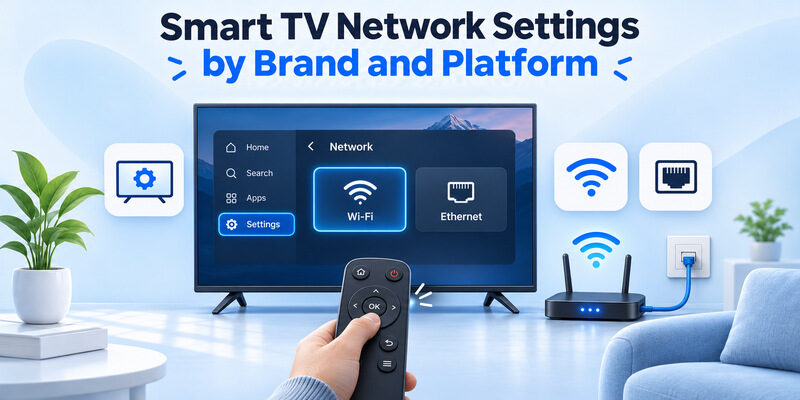
Short answer: Identify the TV’s built-in operating system, then open its documented Network or Network & Internet menu.
Use the TV’s own home screen to identify the operating system before you look for network settings. TCL Support documents separate network procedures for its platforms, and Google TV Help and Roku Support document different menu paths.
Open smart TV network settings from the television’s own interface so the result applies to the correct device.
For a player connected by HDMI, open its network settings separately. The television and player can use different connections.
Identify the Operating System
Identify the built-in platform
Open the TV’s own Home and About screen. Read the model and platform before following brand-based instructions. Philips, Panasonic, Toshiba, JVC, Insignia, Hisense and TCL can differ by model or region. A Google or Roku screen from a connected player does not identify the TV itself. When you check smart TV network settings after an update, start with the same baseline.
Identifying the television platform also helps you choose a TV remote app for your platform when you want to control a compatible TV from your phone.
Confirm the actual network
Use the television’s home screen to identify the built-in platform. If a connected streamer is displaying its home page, use the TV remote or physical input controls to return to the native menus. Record the television model before using a support page that assumes a certain software generation.
Check whether the exact feature has a dependency that occurs during setup rather than playback. A television can show a locally playing HDMI source while an account feature or streaming service stays unavailable. Test the actual content and input you plan to use while the internet is disconnected.
If a supported accessory remains paired and works for one task, use that as a baseline. Open its companion app and run the scan or control action separately. Check the app’s permission before forgetting a connection that already works. Re-pair only if the accessory instructions call for it.
Use the model identifier from the television label or its support screen to find the correct manual. The brand on the frame establishes who made the TV, and the built-in home screen can establish which software it runs. A similar remote or home screen on an attached player can obscure which menu you opened.
Read more: Samsung Smart TV Network Settings Greyed Out Fixes
Find Network on Google TV
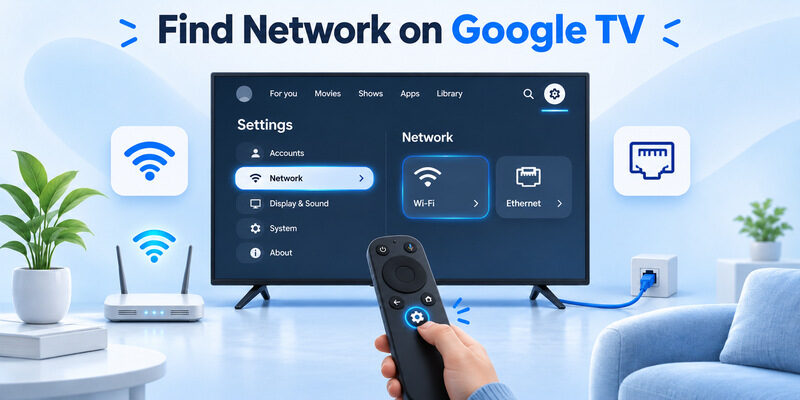
Open Network & Internet on Google TV
Google TV Help uses Settings → Network & Internet. Check whether Wi-Fi is on and which network is active. Choose the intended network and enter the password if needed. Look up the TV model if your interface uses a different label. A repeatable result can help when comparing smart TV network settings across firmware versions.
Verify the active connection
After it connects, test a video in a known app. Use the TV’s own home screen so the result belongs to the television.
Start the test from the television’s native settings so you know which equipment the result belongs to. If available, compare the TV-to-router result with internet access. Then use a familiar TV app. This separates a failed network layer from an isolated app or account problem.
On Google TV, Network & Internet is generally in the TV’s settings. On Roku TV, start at Settings → Network. Return to the built-in home screen before choosing either path. The network menu on an attached player will show the player’s connection and can report success even while the TV is offline.
Pair while you can see the television screen and identify the intended device by its actual name. If a code appears, compare it with the phone’s selected entry. Verify one direction on the television before testing voice or playback, which may depend on a separate setting or feature. If the original controller is unavailable, explore how to connect Google TV to Wi-Fi without a remote using a method supported by your device.
Find Network on Roku TV for Smart TV Network Settings
| Feature or step | What to verify |
|---|---|
| Wi-Fi connection | Check active network, signal and current password |
| Ethernet connection | Check wired support, cable and active status |
| Internet access | Play a familiar item in a TV app |
| Local phone control | Run a fresh scan and test one direction |
Open Network on Roku TV
For a Roku TV, Settings → Network → Set up connection is the documented starting point. Choose Wireless, or Wired when supported, and follow the prompt. Use Check connection to compare the local wireless or wired connection and internet access where shown. Keep the result with the settings you use for smart TV network settings.
Use the native settings screen
A Roku player on an HDMI port has its own Network screen. Decide which device you want to get online before entering the password.
Open the television’s own network screen and select the intended home network. A saved name can stay in the list while the connection is inactive. Compare the current router name and password if a replacement or configuration change occurred. Check which network the television shows as connected after joining.
Open the information page for the exact app. A system permission list shows access grouped by resource, while an app’s page groups the resources used by that installed copy. Make one change and immediately open the affected feature to see whether the new access is enough for the task.
A privacy report can show activity after a permission was used. Review it after you reproduce the task and match the timestamps to the actual app. Then use the app’s access settings to decide whether it should keep the relevant permission. A report and the current switches describe different things.
Read more: Smart TV Without Internet What Still Works
Find Network on Fire TV
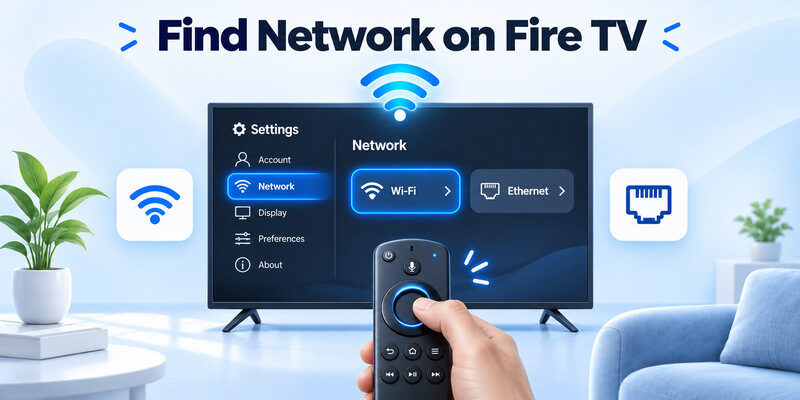
On compatible Fire TV interfaces, check Settings → Network. Select the active wireless network or use supported Ethernet according to the television manual. If Fire TV is a separate Stick or Cube, its settings govern that device’s connection. To narrow a problem involving smart TV network settings, observe which step first changes the result.
An Insignia or Toshiba model with Fire TV can have a different menu from a similarly branded model with different software.
Run the same check after the television spends its usual time in standby. Observe whether it rejoins the expected network and whether the same app can play again. If problems recur only when the set wakes, compare its documented wired option or record the software version before requesting model-specific support.
Use automatic addressing as the initial comparison when the home network normally uses it. Record any deliberately configured values before changing them. If multiple devices on the same network also fail, use the router or internet service status to narrow the problem before entering manual values on the TV.
Keep a working way to choose inputs and reach the television’s network menu. When phone discovery fails, the original TV remote or documented physical controls can reopen the settings. If you have a separate streaming box, use its original controller to check that box’s connection independently.
Keep the television awake and open the app’s device picker. Verify the intended home network on both devices. A guest network may offer internet access while isolating its clients from one another. If another compatible phone sees the television, compare permissions and the active network on the original phone.
Test linked power while both devices are idle. Choose one device to initiate the action and observe the other. Then restore the initial state and swap the initiator. The two directions can use independent options, and the feature can behave differently after standby than after a full restart.
Once a compatible television is reachable, follow the Google TV remote app for Android guide to complete pairing and test navigation.
Check Philips Panasonic and Hisense Models
Verify exact menus for other manufacturers
Consult the model manual for Philips, Panasonic, Hisense, Toshiba, JVC, Insignia or TCL when the operating system differs. Check whether the menu says Network, Connection or Internet. Use the manufacturer’s terminology for hidden networks and diagnostic status. Compare this result with the original symptom before resetting smart TV network settings.
Look up Philips smart TV network settings, Panasonic smart TV network settings or Hisense smart TV network settings using the full model code. The manufacturer and platform together determine the correct instructions.
Test the affected TV app
Do not assume every brand offers manual addressing or a LAN port. Verify the supported choices on the exact television.
Check that the exact TV has a supported LAN port and connect it to an active router or switch port. Open the wired status screen after connecting. If Ethernet works, compare the same TV app on Wi-Fi to isolate a wireless problem from broader internet or account issues.
Use a specific model number for a Philips, Panasonic or Hisense TV. Repeat that check for TCL, Toshiba, Insignia or JVC rather than relying on the brand alone. The operating system may determine where wired setup, wireless setup and connection tests appear.
Read more: Smart TV Internet Connection Setup for Wi-Fi and Ethernet
Check TCL Toshiba Insignia and JVC Models
Check the OS on a shared brand name
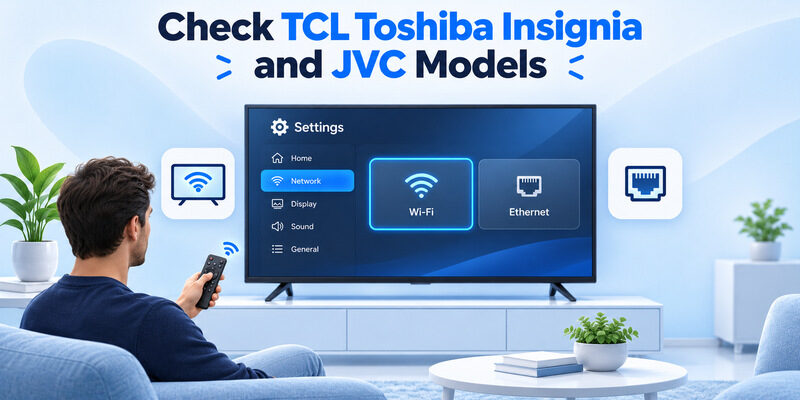
On TCL, Toshiba, Insignia or JVC televisions, start with the model and the television’s own home screen. A Fire TV model will organize its settings differently from a Roku TV or Google TV model. Match the television to the manufacturer’s instructions before trying a network reset or searching for a wired option. If the result is intermittent, include the starting state in your notes on smart TV network settings.
For TCL smart TV network settings, Toshiba smart TV network settings, Insignia smart TV network settings or JVC smart TV network settings, identify the platform on the actual model. Use the same model-first check for Vitron smart TV network settings.
Find the first failed connection
A streaming stick changes the interface you see on its HDMI input. Use the TV’s physical Home button or input selector to return to the television’s own network menu.
Use the supported app with the phone and television on the same reachable home network. Keep the TV awake for a fresh scan and verify the entry by testing a direction. If the phone still cannot find a TV that can stream, check guest isolation or the app’s discovery access. If you own an Insignia television, compare Insignia Roku TV and Fire TV remote options after identifying the platform built into your model.
For a brand sold with more than one platform, pair the model number with the operating system shown on the TV. When following a support guide, verify that its first menu matches your settings screen. If it does not, use the model information and support search instead of trying an unrelated factory reset. This also helps you confirm whether an Ethernet option should exist on that model.
Join Wi-Fi or Ethernet
Join Wi-Fi or use a supported wired connection
Select the intended network name and enter the current password. For a wired TV, trace the Ethernet cable to the home router or switch and check that Wired is active. Confirm the television’s connected status before troubleshooting apps. Confirm the same result after returning to your usual setup for smart TV network settings.
Verify device discovery
When you change routers, the saved network on the TV can differ from the one shown on your phone. Compare active connections rather than saved entries.
Use a phone or laptop on the same network for comparison. Make sure its result comes from Wi-Fi and that the network name is the one used by the television. If both lose internet access together, check router and service status. If only the TV is affected, use its own connection screen.
Use the shortest simple chain that still contains the equipment being tested. Start with the television and the one source, using an input and cable that already display its picture. Compare the documented command with the same setup through the receiver or switch. Retest audio after restoring the original route.
Use a familiar clip and write down the working TV sound output before making changes. If you disconnect a receiver to test video, return to that output after you reconnect it. The television may have selected its internal speakers while the receiver was absent, which makes the original volume test hard to compare.
Read more: 4K Monitor With HDMI-CEC Buying Guide
Diagnose a Failed Network Test
| Example result | First comparison |
|---|---|
| A TCL television has a separate Roku player | For a Roku TV, Settings → Network → Set up connection is the documented starting point. |
| An Insignia model uses Fire TV | On compatible Fire TV interfaces, check Settings → Network. |
| A Philips TV manual uses a different network label | Google TV Help uses Settings → Network & Internet. |
| A Panasonic, JVC or Toshiba model varies by region | Open the TV’s own Home and About screen. |
Use a connection test to locate the failure
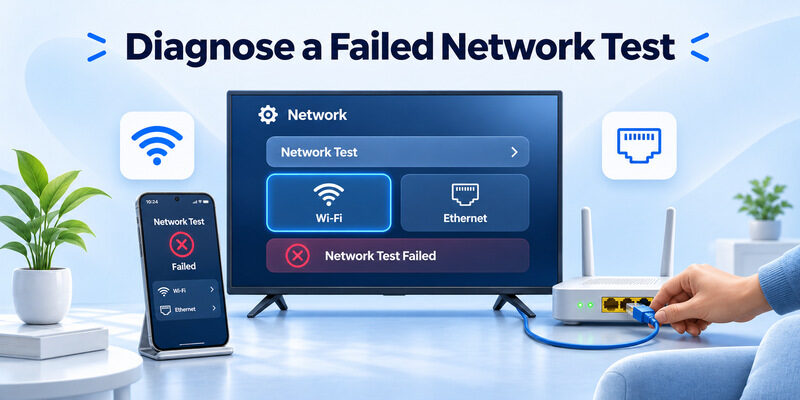
If the TV cannot join Wi-Fi, check password, signal and supported settings. If it joins and has no internet, compare a second device on that network. If only the phone remote fails, check local reachability and permissions while the TV is awake. Use a single change to identify which part of smart TV network settings affects the result.
Retest after standby
Open a familiar streaming app as an internet check, then send a direction from the phone as a separate local-control check.
Check whether a second device sees the same network in the room. If the television offers manual entry for a hidden network, use the exact name and the security details in the router’s settings. If the signal is weak on multiple devices, examine placement and router coverage before resetting the TV.
Make sure you have a way to reach the television’s home screen if the source stops responding. A TV remote can select an input while a player’s original remote can open its own settings. A network remote, where supported, depends on the television being awake or reachable in the state the app requires.
If the Stick is offline and its controller is missing, see how to connect a Fire TV Stick to new Wi-Fi using an available setup method.
Read more: HDMI-CEC Cable Buying and Troubleshooting Guide
Verify Your Phone Remote
Verify control after the network test
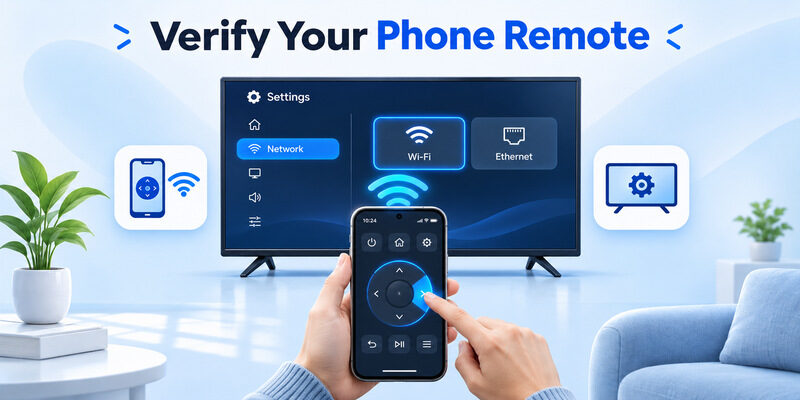
Once the TV joins the home network, open an app that supports the model and run a new scan with the TV awake. Select the right device and try one direction on its home screen. If playback works but the scan fails, check the phone’s network and the app’s discovery permission. Check the feature against your model’s documentation for smart TV network settings.
Check the television itself
Check for guest isolation when the phone and television can each reach the internet but cannot reach each other.
Have the current network name and credentials ready if you remove saved settings. Prefer the documented network-only procedure when that addresses the problem. After reconnecting, verify one streaming feature and one local feature if you rely on both. The network reset can restore one path while a separate pairing still needs attention.
Once the TV is reachable on the home network, can provide a backup for supported TV controls on iPhone. Select the television and try a direction key while its screen is awake. Keep the physical control available if the TV needs to reconnect.
Try a second installed service on the TV and compare the affected app on another device if possible. An issue confined to one app can depend on the service or account. If every TV app fails, review the television’s active network and use its connection test before changing app settings.
Compare another device only after confirming that the accessory or television itself responds to its physical controls. If one phone fails and another works, review the failed phone’s app settings. If both fail, check the target’s own settings, network connection or compatibility before restoring more access.
Open a visible source menu with the source’s own remote. Set it aside and use a single direction key from the other remote. Note where the highlight moves. If that works, compare OK and Back separately. A manufacturer can support only a subset of the controls forwarded to a particular device.
Final Thoughts
Start with the simplest comparison. Identify the operating system from the television’s own About screen and follow the model-specific Network path.
Use one internet app and one local navigation command as separate checks, and compare a second device on the same network if one fails. Keep the model number and the working settings for smart TV network settings handy.