App Permissions Android Guide for Every App
Short answer: Open Settings → Apps, choose the app, and tap Permissions to change the access it requested.
Use App info to inspect one app, or Permission manager to inspect all apps that can use the same resource. Google’s Android Help documents per-app permissions and Permission manager under Privacy on supported Android versions.
If you searched “app permissions Android,” App info is the quickest way to review one installed copy.
Check the actual app name and profile. A work app and a personal copy can have different access settings. Test the version you normally use.
Open App Info and Permissions
Find the app info page
Open Settings → Apps and select the installed app. Choose Permissions to see allowed and denied access. You can also use the app icon’s App info shortcut when the launcher offers it. Select one permission and review the available choices. Check the feature against your model’s documentation for app permissions Android.
To review Android permissions for a single feature, use the information page for the installed app. The list there shows which access it has already requested. If you use your phone to control a television, compare TV remote apps for Android and review the access requested by the app you choose.
Compare the available choices
Open the information page for the exact app. A system permission list shows access grouped by resource, while an app’s page groups the resources used by that installed copy. Make one change and immediately open the affected feature to see whether the new access is enough for the task. If app permissions Android still gives the wrong result, return to this comparison before changing a second setting.
Try a second installed service on the TV and compare the affected app on another device if possible. An issue confined to one app can depend on the service or account. If every TV app fails, review the television’s active network and use its connection test before changing app settings.
Read more: App Permissions iPhone Guide for Camera Location and Local Network
Use Permission Manager
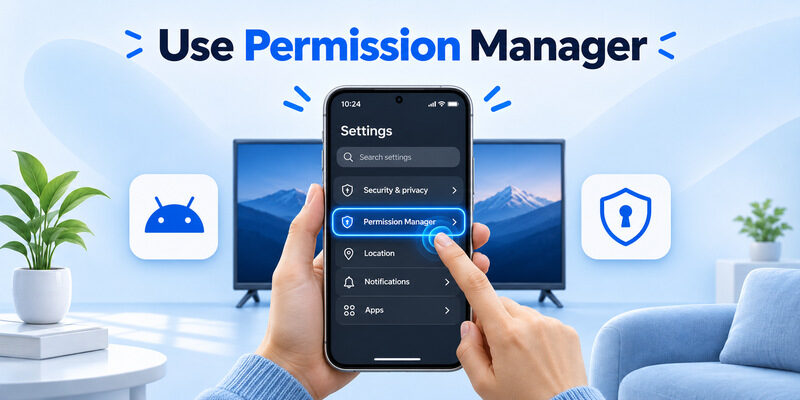
Use Permission manager by category
Google’s documented Pixel-style route uses Security & Privacy, Privacy, and Permission manager. Choose the resource, then select the app. Manufacturer menus may use different groupings. Settings search is useful when the words differ. If you need help with app permissions Android, give support the model and the result of this check.
Android’s Permission manager can show the apps that have access to the same category. To compare permissions on Android across apps, begin with one category at a time. To understand why a remote may request device access, learn how a remote TV app connects through Wi-Fi, Bluetooth, or infrared.
Review access after testing
Use this screen when reviewing all apps that can use a resource. Start from App info when only one app is involved. In your notes on app permissions Android, include which device actually responded.
A privacy report can show activity after a permission was used. Review it after you reproduce the task and match the timestamps to the actual app. Then use the app’s access settings to decide whether it should keep the relevant permission. A report and the current switches describe different things.
If a camera works in one app and fails in another, inspect each app’s Camera permission. If every app fails, compare with the phone’s device-wide camera switch when available. Test on the same profile and use a familiar feature to separate a resource switch from a problem inside an individual app.
Choose Allow Only While Using the App for App Permissions Android
| Feature or step | What to verify |
|---|---|
| Per-app access | Review the permission on the exact app |
| System setting | Check the radio or other system-wide control |
| Accessory or television | Confirm power and the documented connection |
| App action | Retest the feature that requested access |
Choose access for the actual activity
Permissions can offer choices such as Allow only while using the app or Ask every time, depending on the permission and Android version. Use the option that fits the feature. Return to the app and test while it is open. Verify the result in the setup you actually use for app permissions Android.
Open the relevant feature
A one-time camera task can use different access from a feature you need every day. Look for the choices the actual permission presents.
If a prompt appears on startup, close it and reopen the exact feature if the app allows that. This helps identify what action caused the request. Where the system offers a limited or while-in-use choice, compare it with the documented need and test the feature with that narrower scope. Keep the result with the model details when reviewing app permissions Android.
Android presents choices based on the resource and the installed app. A mapping app may ask for location while you are using it. A camera app may offer a one-time choice for a relevant permission. Use a normal task to verify the scope you selected and revisit the setting only if the documented feature fails. A work version of the app can show a separate choice.
Decide which capability is essential before comparing listings. Check the supported control function and the video mode in the official documents for the exact item. When it arrives, use the source and connection you plan to keep, and test your actual daily settings while a return is possible.
Read more: Definitive Technology Soundbar Remote Replacement and Setup
Review Samsung and Xiaomi Menus
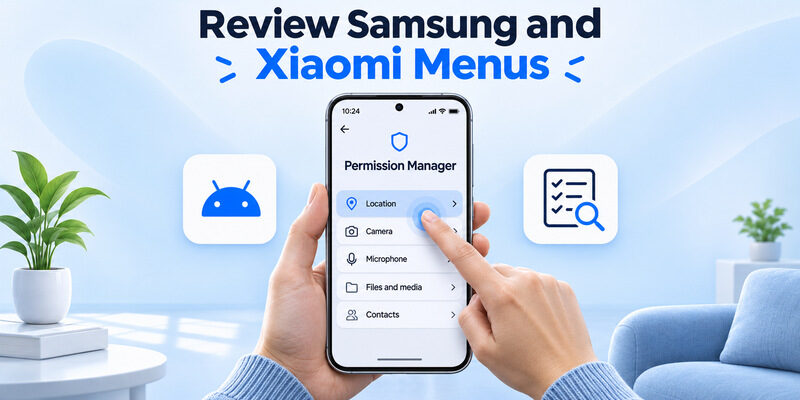
On Samsung One UI or Xiaomi HyperOS, look for the app’s information page or search Settings for Permission manager. The location varies with the software. Read the app’s current permission list before following instructions for a different model. Check whether app permissions Android changes the feature that originally prompted the test.
When reviewing permissions on Samsung phone models, follow the menu for the installed software. For Xiaomi models, look up the exact version of HyperOS or MIUI before relying on a path from another device.
For a new app install, trigger the feature once so that the system can ask for access if required. A missing switch can mean the app has never requested that permission. Use the same starting state when testing app permissions Android again.
Check whether the phone has a work profile, management configuration or restrictions. A managed copy of an app can have a separate badge and a separate permission page. If you are comparing two phones, record the installed app version and profile as well as the operating system shown on each.
Pair while you can see the television screen and identify the intended device by its actual name. If a code appears, compare it with the phone’s selected entry. Verify one direction on the television before testing voice or playback, which may depend on a separate setting or feature. For a practical setup example, see how to control a Samsung TV with your phone using a compatible app.
Use a phone or laptop on the same network for comparison. Make sure its result comes from Wi-Fi and that the network name is the one used by the television. If both lose internet access together, check router and service status. If only the TV is affected, use its own connection screen.
Confirm the full model and regional suffix where the manufacturer uses one. Read its input or system-control section and look for the feature by name. Product pages commonly highlight gaming picture modes. The manual is a better place to verify which port exposes linked power or input control.
Control Camera and Microphone Access
Check the device-wide camera and microphone switches
Some Android releases let you disable camera or microphone access for all apps. Check the relevant system privacy control when the individual app already has permission. Turn it on only for the task if you normally leave it off. Retest after restoring the previous setting to see which part of app permissions Android changed.
Verify the requesting app
Test the camera or microphone from the actual app after confirming the system switch. A different app opening correctly is useful but does not establish the same access for this app.
Choose the scope offered by the operating system for the specific feature. A scanner can require the camera while a voice feature can require the microphone. Test the function that made the request immediately after changing its setting. Leave unrelated resource settings as they were during that trial. Before you make another change to app permissions Android, repeat the comparison with the equipment you normally use.
If a supported accessory remains paired and works for one task, use that as a baseline. Open its companion app and run the scan or control action separately. Check the app’s permission before forgetting a connection that already works. Re-pair only if the accessory instructions call for it.
Keep a working way to choose inputs and reach the television’s network menu. When phone discovery fails, the original TV remote or documented physical controls can reopen the settings. If you have a separate streaming box, use its original controller to check that box’s connection independently.
Choose a command the receiving device documents and that produces an observable result. A visible input banner or display transition is a good starting point. Compare the receiver and display if you use both. Test standby only after you understand the result with both devices already awake.
Read more: Mi Remote Technology and How Phone IR Works
Check Nearby Devices for TV Control
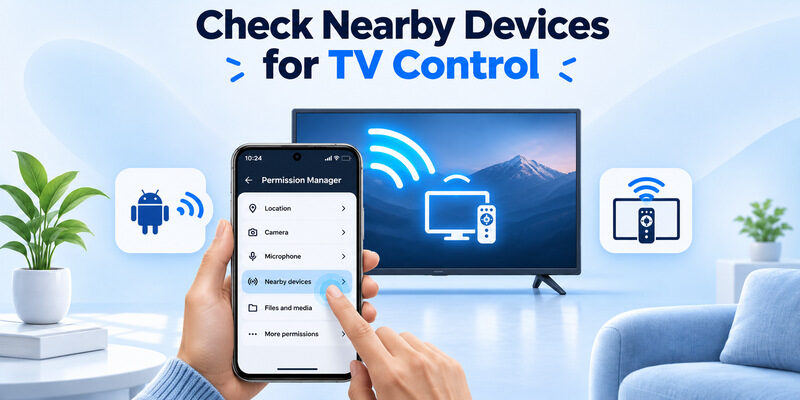
Check Nearby devices for a TV remote
Some apps need Nearby devices for setup or discovery. Review the permission under the app that asked, then keep the phone on the TV’s intended home network. Select the correct TV from a fresh scan and verify one key. Record the device model when testing app permissions Android.
Test the change in the app
If another phone can find the TV on that network, compare the app version and permissions. If neither sees it, check the active TV network and its control support. If you use SmartThings, follow the Samsung TV remote app setup guide to check pairing and app permissions.
Keep the television awake and open the app’s device picker. Verify the intended home network on both devices. A guest network may offer internet access while isolating its clients from one another. If another compatible phone sees the television, compare permissions and the active network on the original phone. When you check app permissions Android after an update, start with the same baseline.
When a previously working remote app asks for access after months of inactivity, review the permission page before resetting your router. Open the feature and check the actual prompt. If permission was restored but a scan still fails, compare whether the TV and phone can reach each other on the main network.
Use a known accessory in its documented setup mode. Check whether the phone sees it, whether the correct app can select it, and whether a basic supported action succeeds. These stages give you separate evidence. If the accessory is already connected somewhere else, follow its instructions for switching the connection.
Use the supported app with the phone and television on the same reachable home network. Keep the TV awake for a fresh scan and verify the entry by testing a direction. If the phone still cannot find a TV that can stream, check guest isolation or the app’s discovery access.
Leave the system in its normal sleep state before testing wake, and use the same control to repeat it. An always-awake device can make an initial command appear more reliable than it is during ordinary use. Add automated power or routing only after the manual command gives a repeatable result.
Read more: LG Magic Remote Technology Behind the Pointer
Review Unused App Settings
Review permissions after inactivity
Android can reset permissions for unused apps on supported versions. If a previously working remote app prompts again, review the specific access it needs before you grant it. Check the unused-app setting when available. Check the response here before changing other options for app permissions Android.
Check access before pairing
A permission reset does not necessarily delete the app. Reopen it and repeat only the feature that stopped working so you can tell what was restored.
Open the app after the period when the issue normally returns and repeat only its main task. Record which permission prompt actually appears. If the access was removed after inactivity, review the unused-app control for that app and whether a targeted exception fits the way you use it. A repeatable result can help when comparing app permissions Android across firmware versions.
Find the equivalent resource name on the version you use. A settings search can locate the permission category, but opening the app’s own info page confirms that you are editing the installed app. Keep track of the option you changed so you can restore it after testing.
Use the television’s home screen to identify the built-in platform. If a connected streamer is displaying its home page, use the TV remote or physical input controls to return to the native menus. Record the television model before using a support page that assumes a certain software generation.
Have the current network name and credentials ready if you remove saved settings. Prefer the documented network-only procedure when that addresses the problem. After reconnecting, verify one streaming feature and one local feature if you rely on both. The network reset can restore one path while a separate pairing still needs attention. For a supported Google TV or Android TV device, follow the Google TV remote app for Android setup guide and test navigation after pairing.
Fix an App That Cannot Detect Your TV
| Example result | First comparison |
|---|---|
| A scanner works in one app and not another | Open Settings → Apps and select the installed app. |
| An app was installed in a work profile | On Samsung One UI or Xiaomi HyperOS, look for the app’s information page or search Settings for Permission manager. |
| The camera switch is disabled system-wide | Some Android releases let you disable camera or microphone access for all apps. |
| The permission list is grouped differently on Samsung | On Samsung One UI or Xiaomi HyperOS, look for the app’s information page or search Settings for Permission manager. |
Separate the television from the phone permission
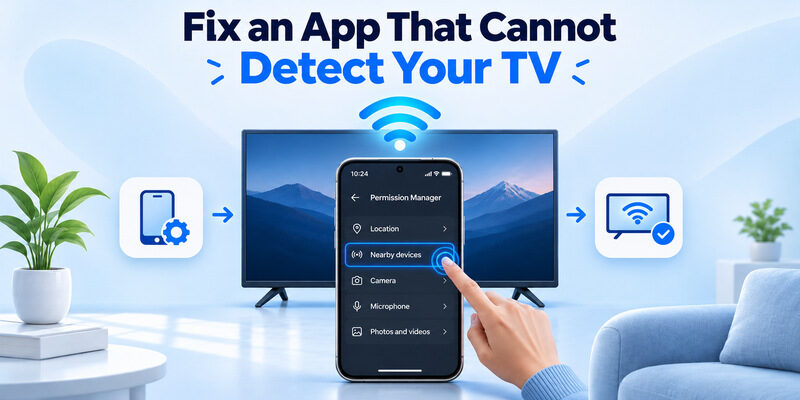
Verify the TV is awake and joined to the same reachable home network, then open a fresh device scan. Compare the Android prompt for that feature with the app’s permission page. If another phone can reach the TV, inspect the first phone’s profile and app access. If neither finds it, check television compatibility and network isolation. Record this result with your notes on app permissions Android.
Confirm what the TV needs
A TV paired for Bluetooth audio may still be unavailable to a remote app that discovers devices over local Wi-Fi. Use the discovery method documented by the app. Learn why guest Wi-Fi can block a TV remote app even when both devices can access the internet.
Compare another device only after confirming that the accessory or television itself responds to its physical controls. If one phone fails and another works, review the failed phone’s app settings. If both fail, check the target’s own settings, network connection or compatibility before restoring more access. Keep the result with the settings you use for app permissions Android.
Confirm the operating system can see the control interface using the manufacturer’s tool or supported system utility. If a USB adapter is missing there, check its data connection and documented software. After detection, compare what the tool can see on the HDMI bus while one television is connected.
Open the television’s own network screen and select the intended home network. A saved name can stay in the list while the connection is inactive. Compare the current router name and password if a replacement or configuration change occurred. Check which network the television shows as connected after joining.
Read more: 5 Device Universal Remote Control Buying and Setup Guide
Audit Your Permissions
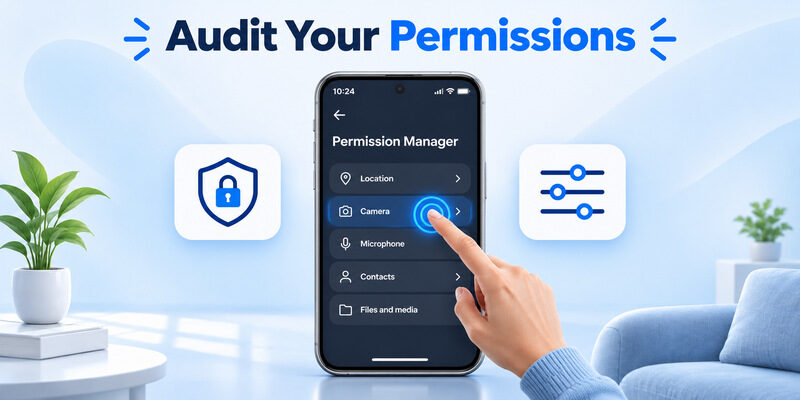
Review one category at a time
Open Permission manager and select a resource you care about, such as Camera, Microphone or Location. Check the list of apps and open any entry whose access you want to change. Reproduce the app’s core feature after reducing access so you can see whether it still works. Identify the active device before changing app permissions Android.
Test the action that failed
Work profiles can have separate copies of the same app. Check the profile badge and review the installed copy you actually use.
Review the access again after completing setup. Keep the permission needed for a feature you actually use, and test a core action before deciding whether a change is suitable. If you use another app for the same accessory or television, review that app separately. To narrow a problem involving app permissions Android, observe which step first changes the result.
With a compatible television awake on your home network, use to try a direction key from an iPhone. Review the permission associated with TV discovery if the set does not appear, then check that the phone can reach the television.
Final Thoughts
Start with the simplest comparison. Start in Settings → Apps and check the installed app’s Permissions page. Confirm you selected the profile you are actually using.
After you restore one permission, test the feature immediately. If television discovery still fails, verify the connection and TV compatibility separately. Keep the model number and the working settings for app permissions Android handy.